|
|
|
|
Memoir
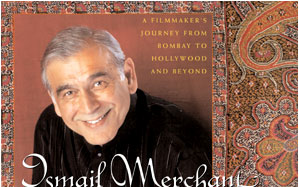
With a View Feb. 10 issue - The Indian half of Merchant Ivory Productions got his start in a scene worthy of one of the duo's opulent period films. Ismail Merchant was only 13 when Bollywood starlet Nimmi invited him to the Bombay premiere of her first picture, "Barsaat."
AS THEY ARRIVED in her green convertible Cadillac, the crowd showered them with thousands of golden marigolds. "It seemed so magical—like the movies themselves," writes Merchant in "My Passage From India" ( Viking Studio ), a slim, jovial memoir. "I can remember thinking, ‘If this is what the film world is, I want to be a part of it'." Merchant has been ever since. He neglected his studies at St. Xavier's Jesuit College at Bombay University, preferring to stage flamboyant productions. While a graduate student at New York University's business school in the late 1950s, he spent most of his energy hustling diplomats, bankers and entertainment folks, trying to raise film funding as well as his profile. Then Merchant met James Ivory, a young Oregon-born director. They went for coffee at the Right Bank on Madison Avenue. And, as Merchant proudly writes in the book—twice—there will soon be a plaque commemorating that meeting. Merchant recalls listening attentively as Ivory talked about film. Ivory remembers Merchant's jumping up to make repeated calls on the coffee shop's pay phone, even borrowing a dime when he ran out of money. After reading "My Passage From India," it's easier to believe Ivory's recollection than Merchant's. In this entertaining collection of anecdotes, studded with famous names and illustrated with candid snapshots, Merchant comes across as a slick but charming operator who will do whatever it takes to get what he wants. And it appears that what he has wanted from that marigold moment forward was fame. He managed to hold the gala premiere of the first Merchant Ivory film, "The Householder," at the American Embassy in New Delhi, where he sat with U.S. Ambassador John Kenneth Galbraith, Prime Minister Jawaharlal Nehru and his daughter, Indira Gandhi. Later, after "Room With a View" and "Howard's End" became huge hits, he writes about how thrilled he was that "Merchant Ivory" had become an adjective to describe sumptuous, meticulous period films. Not that Merchant comes off as a braggart. From his opening recollections of his mischievous boyhood in Bombay to tales of his on-set, home-cooked-curry parties, Merchant is a generous, engaging raconteur. His grounding comes from the artists who most influenced him. In addition to Ivory, Merchant struck up a friendship with Ruth Prawer Jhabvala, the German-born author who has penned most of their screenplays and who, until her association with the pair, "regarded film people as time wasters and, quite possibly, charlatans," Merchant writes. But he reserves
his deepest admiration for the legendary Indian director Satyajit
Ray, who helped edit the first Merchant Ivory film and scored several
others. Throughout the book, he heaps praise on Ray's work.
He also recounts how in 1992 he personally lobbied the Academy of
Motion Picture Arts and Sciences to award Ray a lifetime-achievement
Oscar, and oversaw the rerelease of Ray's greatest films. It
was a rightful homage to the community that sparked his passion for
filmmaking. Merchant may have left India to find fame, but he returned
to it to find humility. MY PASSAGE FROM INDIA by Ismail Merchant For more information or to schedule an interview, please contact: |